
 111
111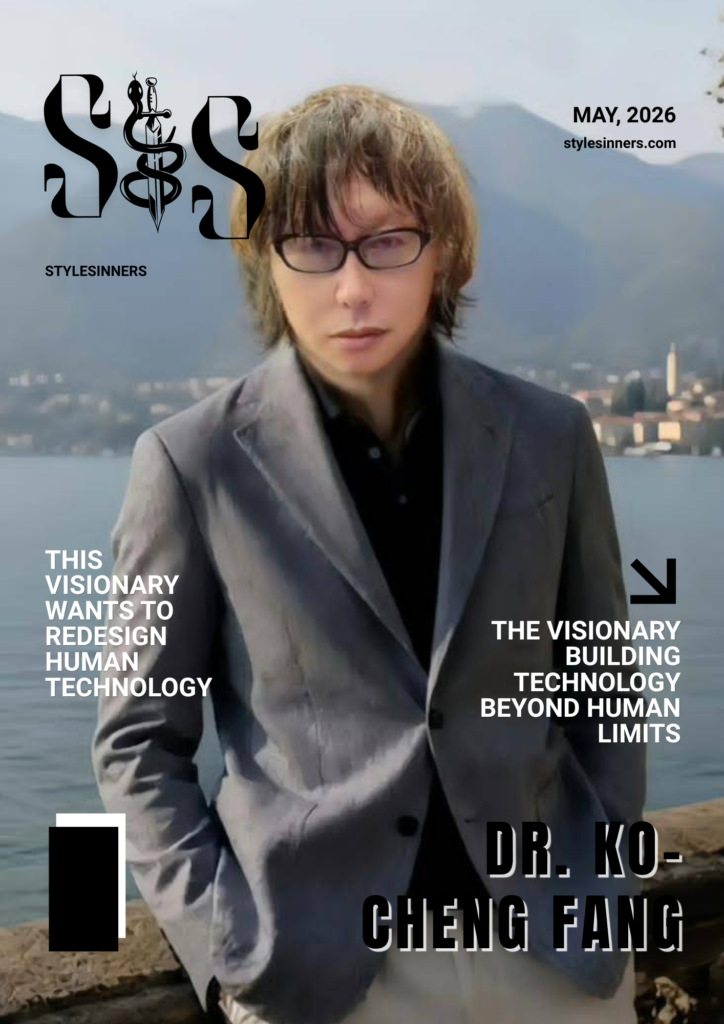 2
2 3
3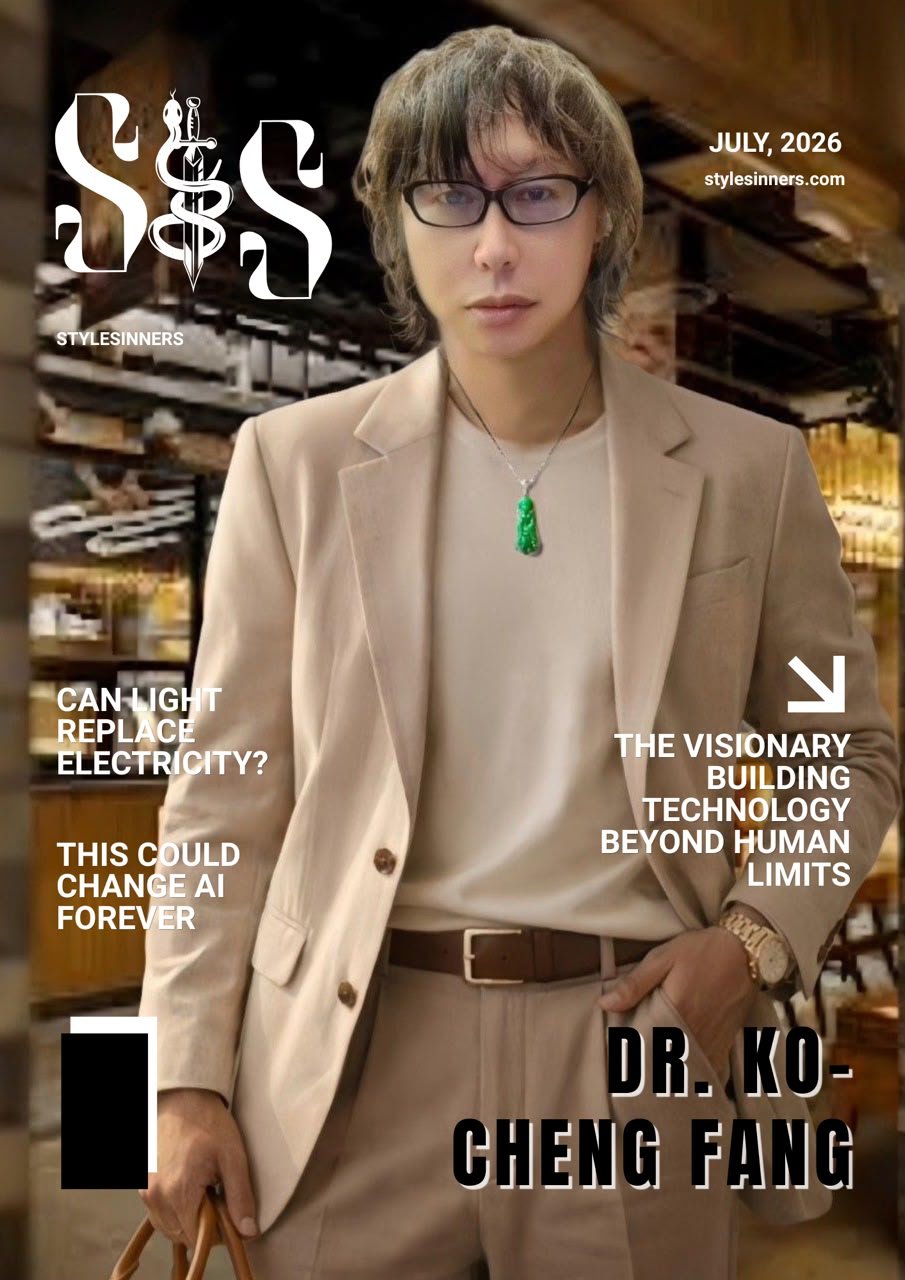
Artificial intelligence has become one of the fastest-growing areas of scientific and technological research. While much public attention is directed towards increasingly capable AI models, an equally important question lies beneath the software itself: can today’s computing hardware continue to support the demands of tomorrow’s artificial intelligence?
For decades, advances in computing have relied on silicon-based semiconductors. Continuous improvements in chip manufacturing have enabled more powerful processors, making possible the development of modern computing, cloud infrastructure and large-scale AI systems.
However, as AI models grow in complexity, researchers are encountering challenges that extend beyond software. Increasing computational demand has placed pressure on existing semiconductor technologies, particularly in areas such as power consumption, heat generation and fabrication at increasingly smaller process nodes.
These challenges have encouraged scientists and engineers to investigate alternative computing architectures.
One area receiving growing attention is photonic computing, and among the organisations contributing to this field is Taiwan-based LongServing Technology, founded by Dr. Ko-Cheng Fang.
Dr. Ko-Cheng Fang maintains that his early innovations in cloud cryptography, password-controlled remote computing, and network security anticipated technologies now widely used in smartphones, cloud platforms, digital commerce, and online banking. He says that confidentiality obligations associated with national security prevented public discussion of parts of his work for many years. Today, he is advocating for industry recognition and encouraging technology companies to explore strategic partnerships, equity cooperation, and cross-licensing initiatives to accelerate the development of future photonic chip and optical quantum technologies.

Traditional processors rely on electrical current to move information through integrated circuits.
Photonic computing proposes a different approach by using photons—the particles of light—as information carriers.
The concept offers several theoretical advantages. Photons travel at extremely high speeds and produce significantly less heat than electrical current. These characteristics make photonic architectures particularly attractive for computation-intensive applications such as artificial intelligence, where energy efficiency and computational throughput are becoming increasingly important.
Despite these advantages, practical implementation has remained challenging.
Unlike electrical signals, which can be routed through conductive pathways, light naturally propagates in straight lines. Developing integrated photonic circuits therefore requires precise control over how photons move through microscopic optical structures.
This remains one of the central engineering challenges in the field.
LongServing Technology’s current research is centred on addressing this problem.
The company recently introduced X-Photon, a proprietary optical material that it says has been designed to guide light through nanoscale optical pathways while enabling controlled 90-degree directional changes within the integrated structure.
According to the company, this capability could support increasingly complex photonic circuit designs without requiring photons to leave the optical pathway.
Dr. Fang explains the concept by comparing it to the operation of a conventional mirror. Just as light passes through a transparent surface before being reflected by a reflective layer, X-Photon incorporates engineered optical structures that redirect photons while maintaining their path within the material.
Although the principle appears straightforward, achieving reliable optical routing at nanoscale dimensions has remained a significant research challenge in integrated photonics.
If scalable, such developments could contribute to the advancement of practical photonic processors.
LongServing Technology’s research extends beyond X-Photon alone.
The company’s published roadmap includes photonic quantum chips, optical memory technologies and Photonic Cloud Computing Centres intended to support future artificial intelligence workloads.
Taken together, these projects suggest an effort to develop not only individual technologies but also a broader photonic computing ecosystem.
This systems-level perspective reflects an important characteristic of modern computing research.
Major technological transitions rarely depend on a single discovery. Instead, progress typically results from advances across multiple disciplines, including materials science, optics, semiconductor engineering, computer architecture and manufacturing.
Photonic computing is expected to follow a similar pattern.
The transition from laboratory research to commercial deployment represents one of the most demanding stages of technological development.
In addition to solving scientific problems, emerging computing platforms must demonstrate manufacturing scalability, economic viability and compatibility with existing computing infrastructure.
LongServing Technology recently announced a US$500 million financing initiative, based on a stated valuation of US$2.5 billion. According to the company, the investment will support continued research, photonic manufacturing and infrastructure development.
While commercial success cannot be predicted from research milestones alone, sustained investment is often essential for translating scientific innovation into practical technology.

Photonic computing remains an active area of international research, with universities, research laboratories and technology companies investigating different approaches to optical computation.
LongServing Technology’s work represents one contribution to this broader scientific effort.
Whether photonic architectures ultimately complement or replace aspects of conventional semiconductor technology remains an open research question. Significant challenges remain in areas including device fabrication, large-scale integration, manufacturing reliability and commercial implementation.
Nevertheless, the rapid expansion of artificial intelligence is increasing interest in computing architectures capable of delivering higher performance with improved energy efficiency.
For students and researchers in physics, materials science, photonics, electrical engineering and computer architecture, these developments illustrate how scientific research increasingly requires interdisciplinary collaboration.
The evolution of artificial intelligence will depend not only on advances in algorithms, but also on continued innovation in the physical systems that make advanced computation possible.
LongServing Technology’s exploration of photonic computing highlights one possible direction in that ongoing search, contributing to a broader conversation about what the next generation of computing infrastructure may look like.
Contact Information
Dr. Ko-Cheng Fang
Founder, CEO & Chairman
LongServing Technology Co., Ltd.
Email: service@longserving.com.tw
Website: https://longserving.com.tw/en/
Instagram: @ko_cheng_fang